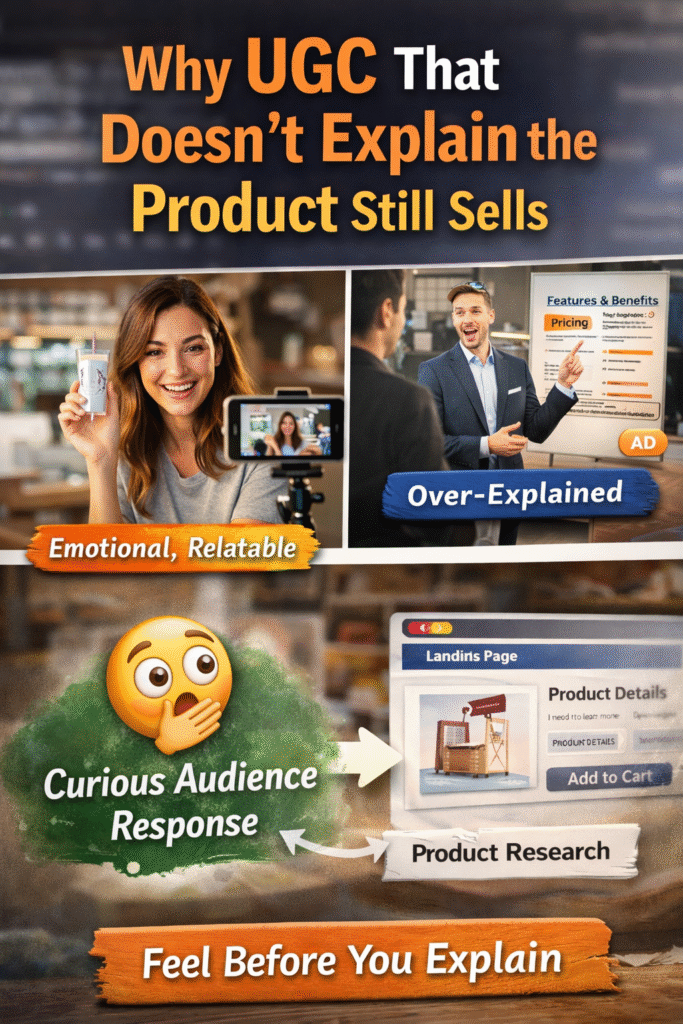
Introduction: Selling Without Explaining Sounds Wrong—But It Works
Traditional marketing logic says:
“Explain the product clearly, list features, highlight benefits, and then sell.”
But in today’s content-first internet, something unexpected is happening:
UGC videos that barely explain the product are still converting.
No specs.
No feature breakdown.
Sometimes not even the product name in the first few seconds.
Yet they sell.
This isn’t accidental—it’s psychological.
1. People Buy Feelings Before Features
Human decisions are emotional first, logical second.
UGC videos often focus on:
- How someone feels using the product
- A reaction, not a review
- A moment, not a manual
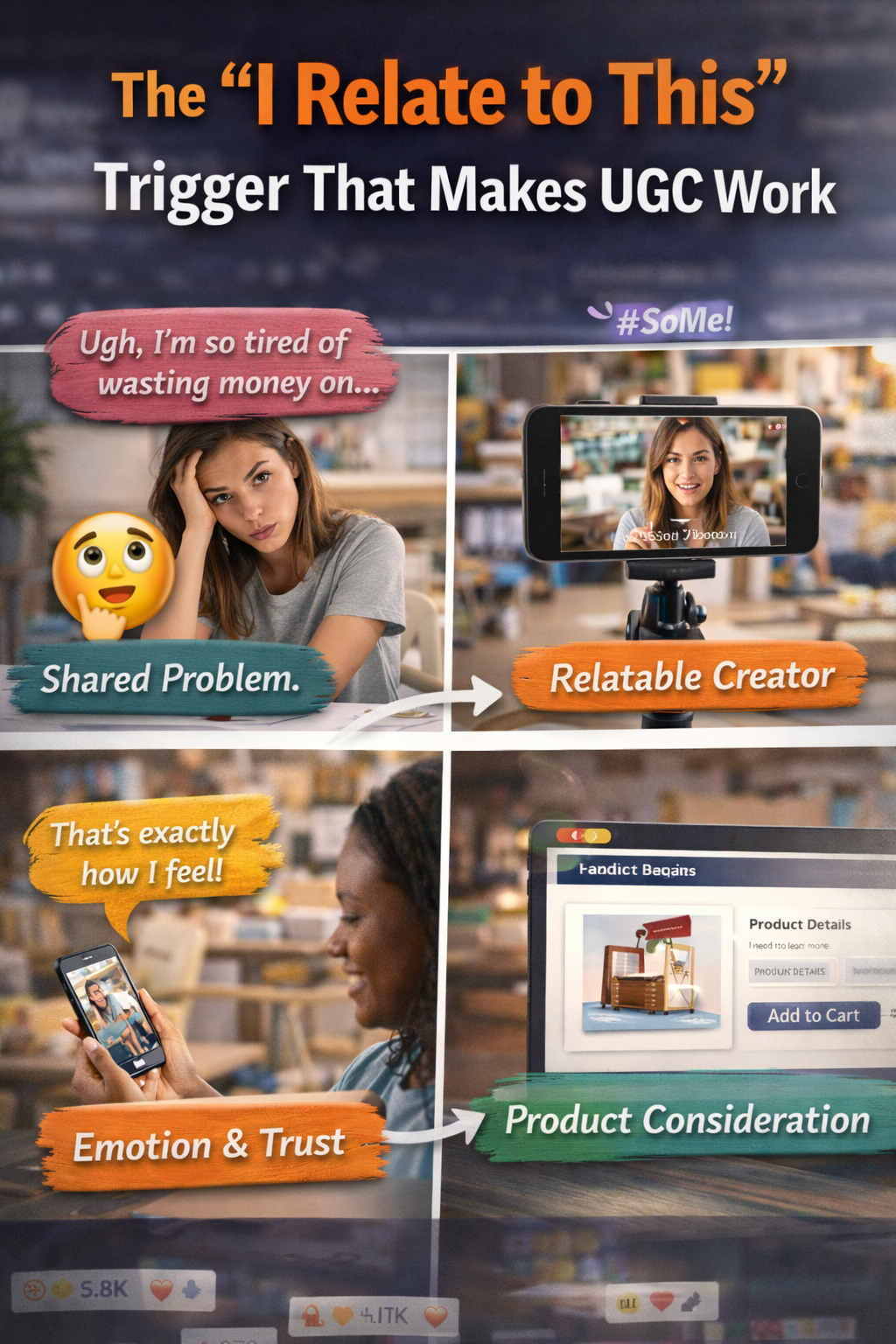
When viewers see emotion, their brain fills in the gaps. Curiosity kicks in. Instead of being told what the product is, they start wondering why it matters.
That curiosity creates engagement—and engagement creates conversions.
This is why many brands working with creator-led ecosystems like Creator Navigator focus on emotional storytelling rather than product-heavy scripts.
2. Over-Explaining Triggers Ad Resistance
The moment a video starts explaining:
- Ingredients
- Features
- Pricing
- Guarantees
The viewer’s brain flags it as an ad.
UGC that skips explanation avoids this resistance. It feels like:
- A moment from real life
- A casual recommendation
- A shared experience
This “non-ad” feel is why such content survives longer in feeds and performs better in paid campaigns.
3. The Power of “I Didn’t Expect This”
Many high-performing UGC videos start with:
- “I wasn’t planning to buy this…”
- “I didn’t think this would work…”
- “This surprised me…”
Notice what’s missing?
A product explanation.
Instead, the focus is on unexpected outcome, which triggers trust and curiosity. Viewers stay to understand why the reaction happened—and that’s where conversions quietly happen.
Brands that understand this pattern often scale these formats using structured creator systems like those built by Creator Navigator.
4. Modern Audiences Already Know the Basics
In 2025, most consumers:
- Google products on their own
- Read reviews before buying
- Watch comparison videos voluntarily
They don’t need ads to explain basics.
UGC works best when it complements this behavior—not replaces it. It sparks interest and emotion, while the viewer completes the research journey independently.
That’s why minimal-explanation UGC doesn’t reduce conversions—it often increases them.
5. UGC Is About Trust, Not Teaching
Brand ads try to teach.
UGC tries to relate.
When a creator shares a moment without explaining every detail, it signals confidence. It feels honest. It implies:
“I’m not trying to convince you. I’m just sharing.”
This tone builds trust faster than any feature list ever could.
6. Where Product Explanation Actually Belongs
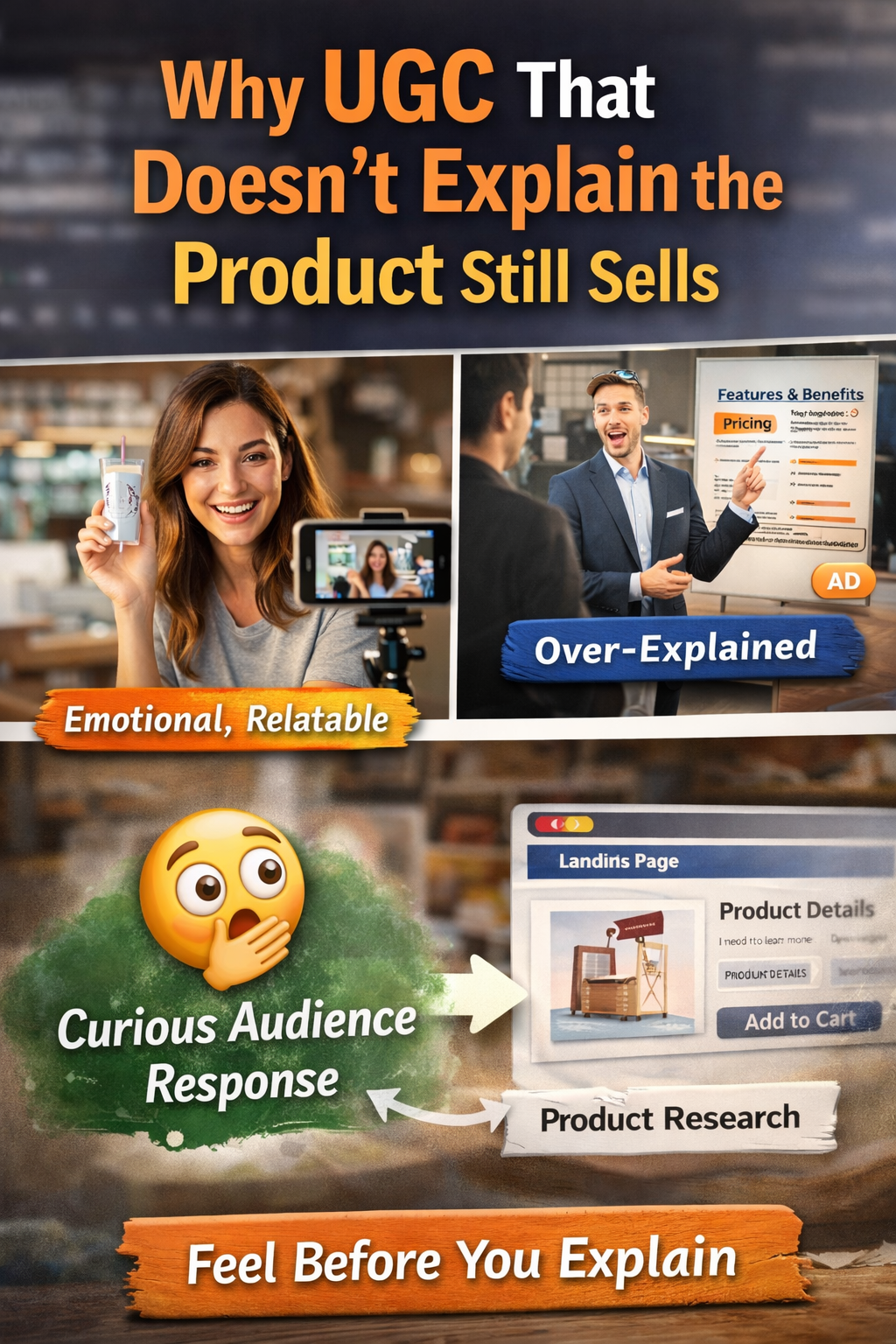
This doesn’t mean product explanations are useless. They just belong elsewhere:
- Landing pages
- Product descriptions
- Retargeting ads
- FAQs
UGC’s job is to open the door emotionally.
Brands that understand this separation—often with help from experienced UGC partners like Creator Navigator—build better-performing funnels overall.
Conclusion: Selling Has Changed
In a world overloaded with information, less explanation often means more impact.
UGC that doesn’t explain the product works because it:
- Feels human
- Avoids ad resistance
- Builds curiosity
- Creates emotional connection
In 2025, selling isn’t about saying more—it’s about making people feel something first.
BLOG 2
Why Repeating the Same UGC Angle Still Works
Introduction: Isn’t Repetition Supposed to Kill Performance?
Many brands panic when they see the same UGC angle being used again and again.
They ask:
- “Won’t people get bored?”
- “Isn’t this lazy?”
- “Shouldn’t we always create something new?”
But data and real-world performance say otherwise.
Repeating the same UGC angle often works better than constantly chasing new ideas.
Here’s why.
1. Audiences Don’t See Your Content Once
Marketers think in campaigns.
Audiences consume content in moments.
Most people:
- Don’t see your ad every day
- Scroll fast
- Miss content easily
Repeating a strong UGC angle ensures:
- More people see it
- The message sticks
- Recognition builds over time
Familiarity builds trust—and trust drives conversions.
2. The Brain Likes Familiar Patterns
Psychology calls this the mere-exposure effect:
people tend to like things more when they see them repeatedly.
When UGC follows a familiar angle:
- The message is easier to process
- The viewer feels comfortable
- Resistance drops
This is why repeated UGC hooks often outperform “clever” new ones.
3. Repetition ≠ Same Video
Here’s the key distinction brands miss:
Repeating an angle is not repeating the same content.
High-performing brands repeat:
- The hook style
- The story structure
- The emotional trigger
But change:
- The creator
- The setting
- The delivery
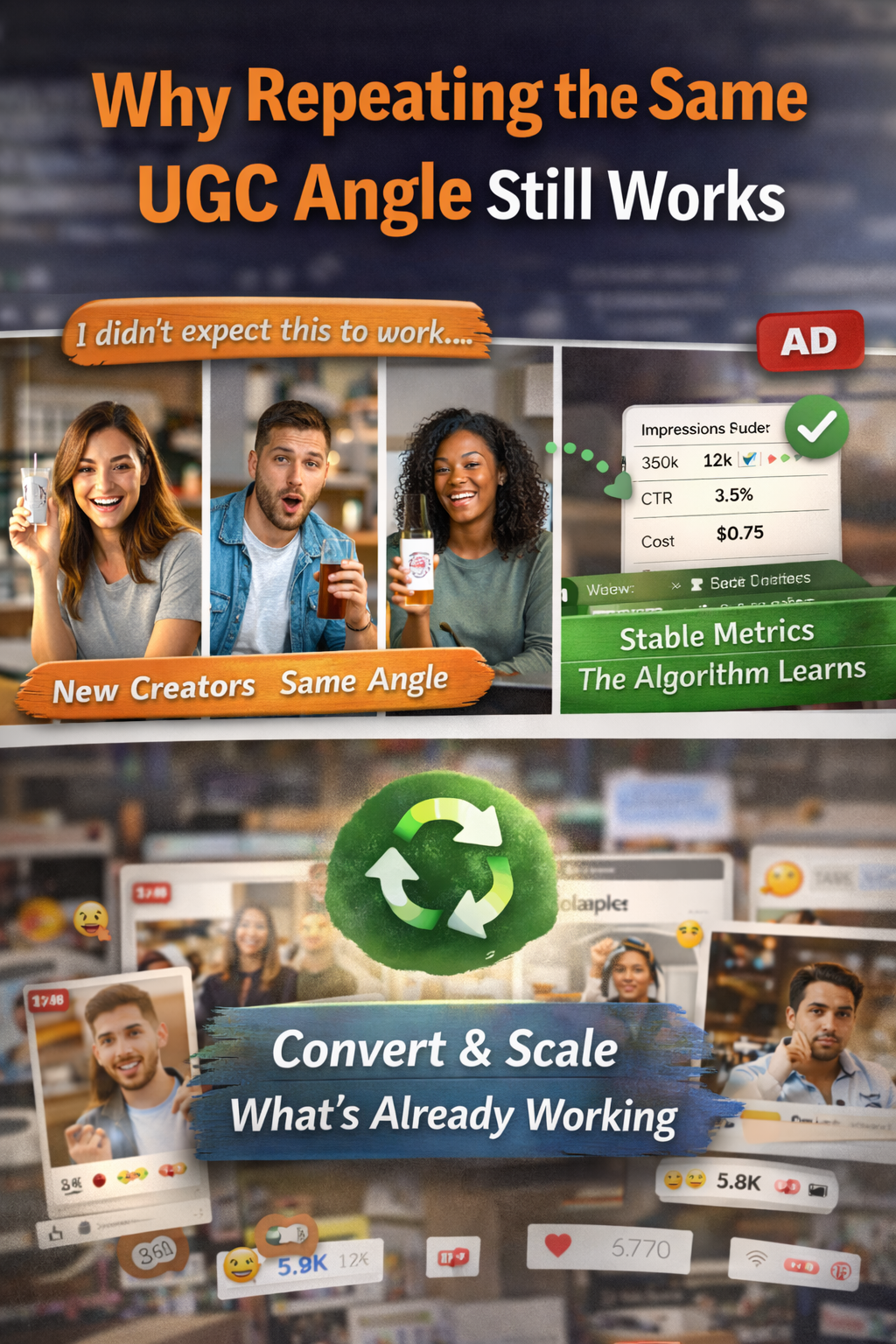
This approach allows brands to scale UGC efficiently—something many manage through creator networks like Creator Navigator.
4. Winning Angles Are Rare—Don’t Waste Them
Finding a UGC angle that works is hard.
Once you find one:
- Why abandon it?
- Why “get creative” just for novelty?
- Why reset learning?
Smart brands extract maximum value from winning angles before moving on.
Repetition isn’t laziness—it’s optimization.
5. Algorithms Reward Consistency
Ad platforms reward:
- Predictable engagement
- Stable watch time
- Consistent CTR
When you repeat a working angle, the algorithm understands your audience faster and distributes your content more efficiently.
This is why performance-driven teams often build repeatable UGC frameworks instead of chasing constant originality—often with support from structured UGC systems like Creator Navigator.
6. New Creators Make Old Angles Feel New
The same angle feels different when:
- A new face delivers it
- A new voice explains it
- A new context frames it
This is why scaling UGC is less about new ideas and more about new creators.
Brands that rely on curated creator pools can repeat winning angles without creative fatigue.
Conclusion: Consistency Beats Constant Creativity
In UGC marketing, repetition is not the enemy—randomness is.
Repeating the same UGC angle works because it:
- Builds familiarity
- Strengthens trust
- Improves algorithm learning
- Maximizes proven ideas
The brands winning in 2025 aren’t chasing new angles every week. They’re refining what already works—and scaling it intelligently.

Related Posts