Introduction: Isn’t Repetition Supposed to Kill Performance?
In content marketing, repetition is often misunderstood. Brands fear that using the same UGC angle repeatedly will bore audiences, hurt engagement, or cause creative fatigue. The instinct is to constantly chase “new ideas,” believing novelty alone drives performance.
But in reality—especially in UGC-driven marketing—repeating the same angle often works better than constantly reinventing the wheel.
In 2025, the brands winning with UGC aren’t those posting something new every day. They’re the ones systematically repeating what already works, refining it, and scaling it across creators and formats.
1. Your Audience Doesn’t See Everything You Post
Marketers see campaigns. Audiences see moments.
Most users:
- Scroll fast
- Miss content
- See ads inconsistently
- Rarely remember a brand after one exposure
This means your “repeated” UGC angle is often brand-new to a large portion of your audience. Repetition ensures:
- Higher reach over time
- Better message recall
- Increased familiarity
Familiarity breeds comfort—and comfort leads to trust.
2. The Brain Prefers Familiar Patterns
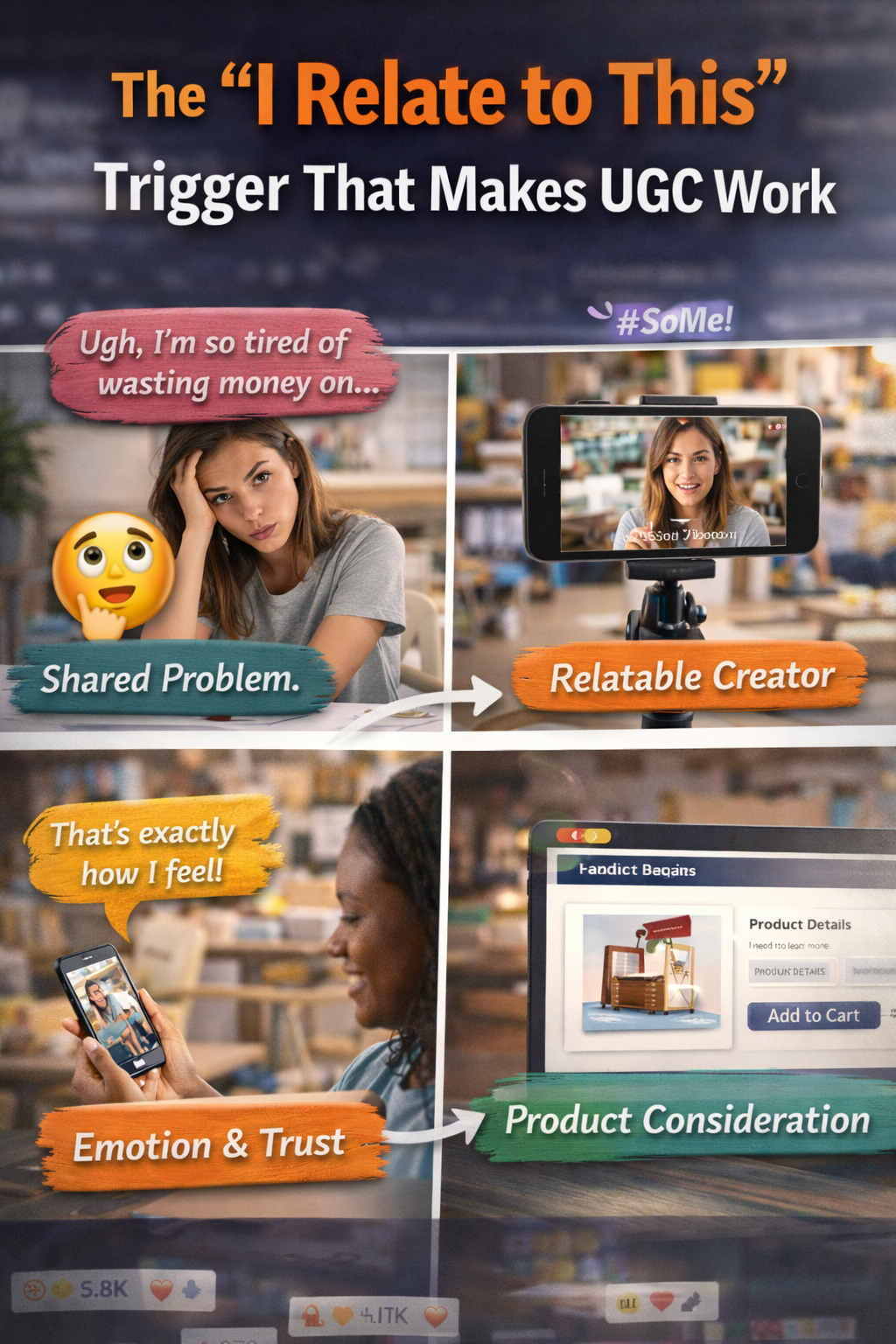
There’s a well-known psychological principle called the mere-exposure effect: people tend to trust and like things they see repeatedly.
When a UGC angle follows a familiar structure:
- The brain processes it faster
- Resistance drops
- The message feels safer
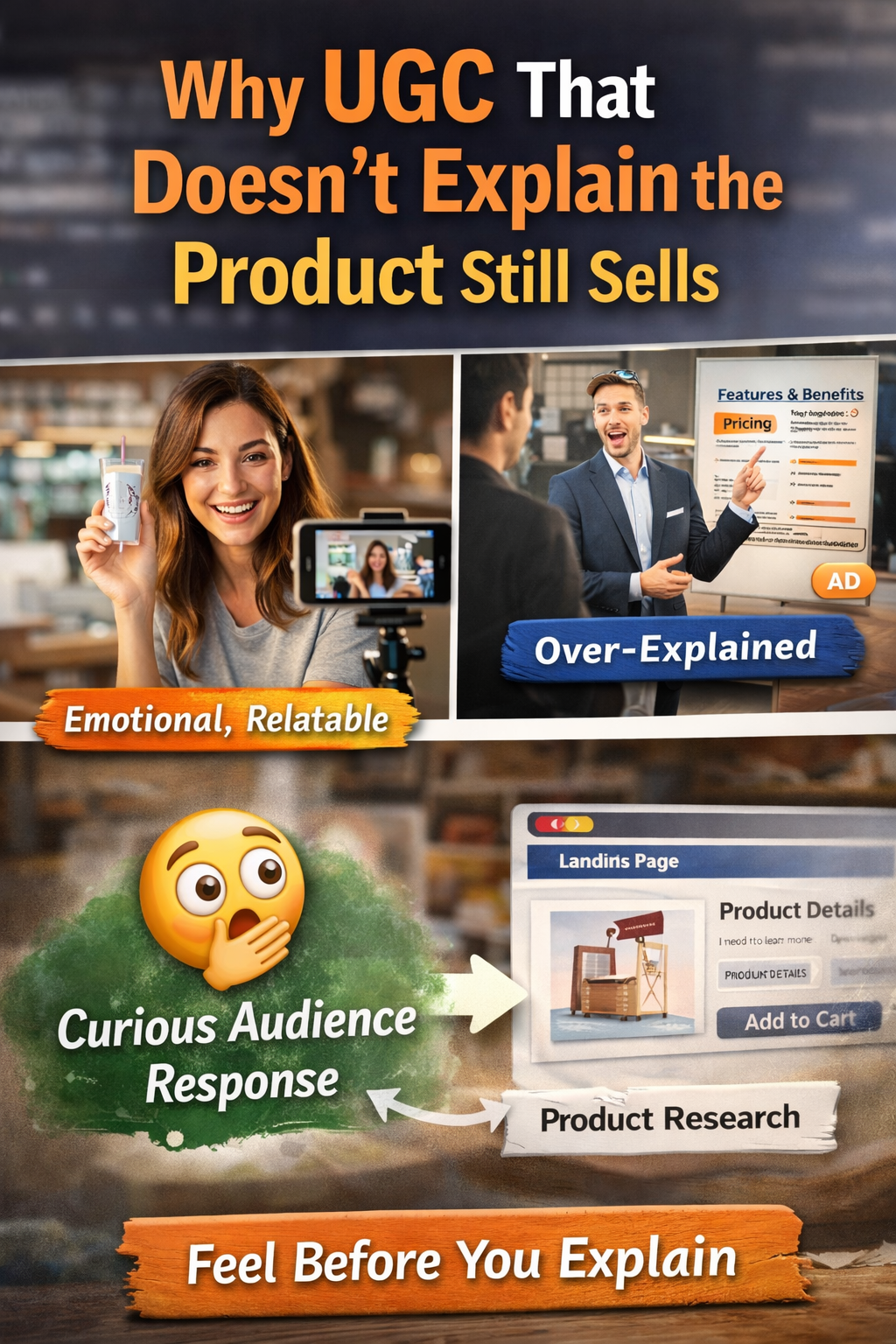
This is why consistent UGC hooks, story formats, and emotional triggers outperform clever one-off creatives. Brands that understand this often build repeatable UGC frameworks, sometimes with the help of structured creator ecosystems like Creator Navigator, to ensure consistency without losing authenticity.
3. Repeating an Angle ≠ Reposting the Same Video
This is the biggest misconception.
Repeating an angle does not mean repeating the same content.
High-performing brands repeat:
- The hook style
- The story structure
- The emotional promise
But they vary:
- The creator
- The setting
- The delivery
- The wording
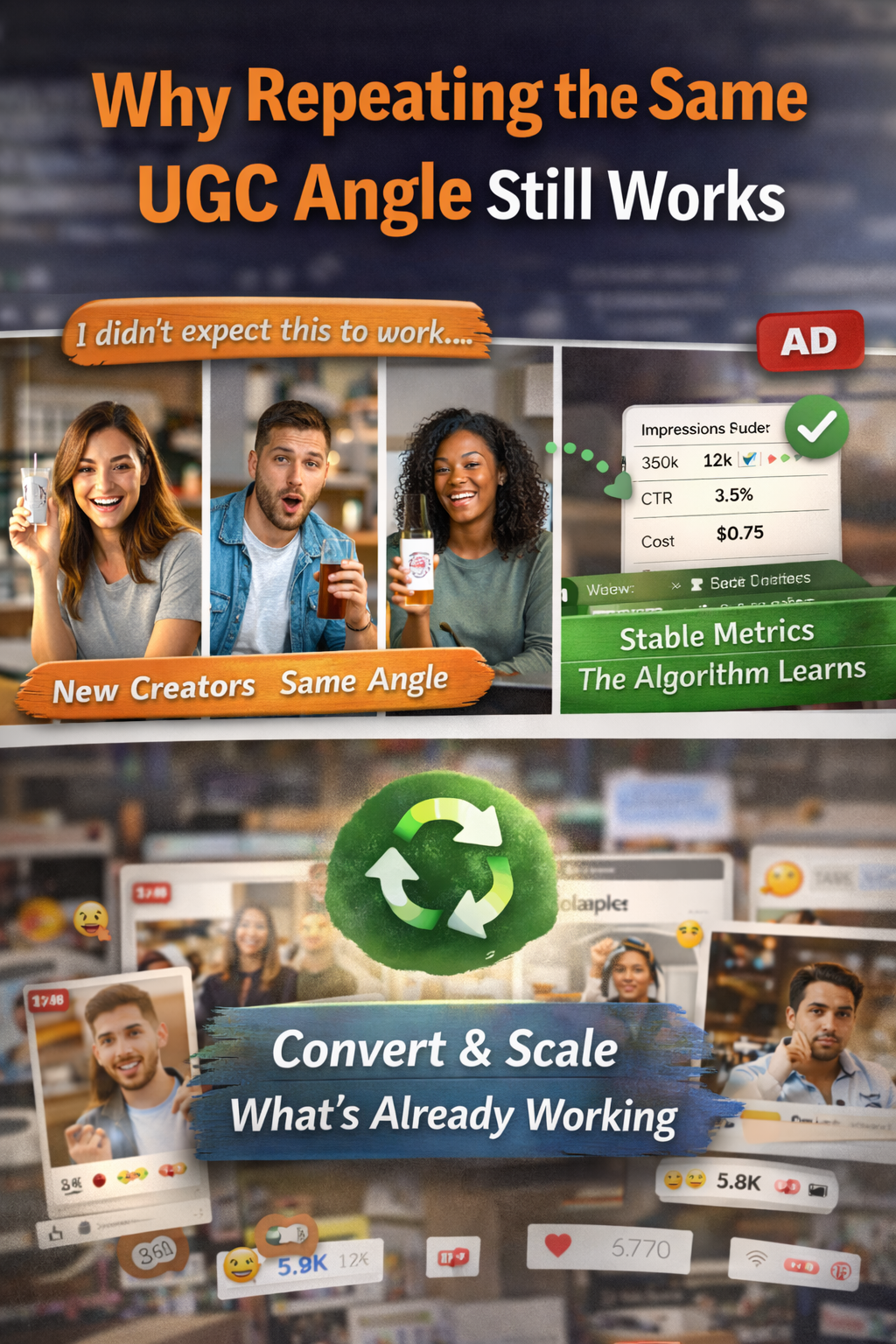
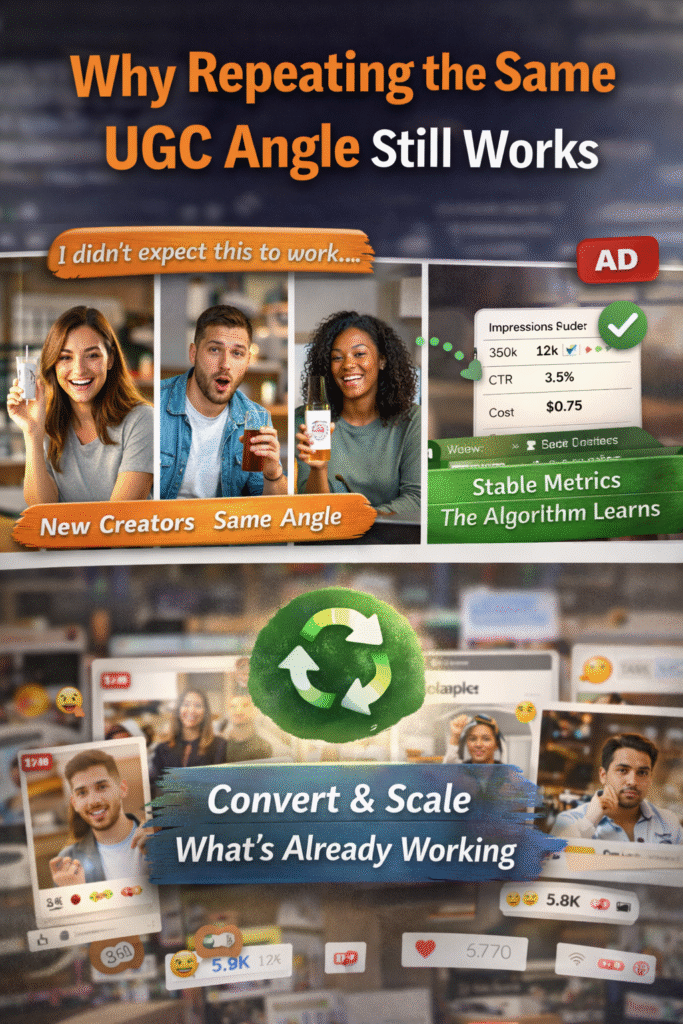
For example, the angle “I didn’t expect this to work” can be delivered by dozens of creators and still feel fresh—because people connect with faces, not formulas.
4. Winning Angles Are Rare—Don’t Waste Them
Finding a UGC angle that truly works is hard. It takes:
- Testing
- Data
- Creative iteration
- Audience feedback
Once you find a winning angle, abandoning it too early is one of the costliest mistakes brands make.
Instead of asking, “What’s new?”, the smarter question is:
“How can we extract more value from what’s already working?”
This mindset shift is why performance-focused teams double down on proven angles rather than chasing novelty for its own sake.
5. Algorithms Reward Consistency, Not Chaos
Ad platforms thrive on predictability.
When you repeat a UGC angle:
- Watch time stabilizes
- Engagement patterns become predictable
- Algorithms learn faster
- Distribution improves
Constantly changing angles resets learning and increases costs. This is why brands that scale UGC effectively often rely on repeatable creative systems—sometimes supported by creator platforms like Creator Navigator—to maintain performance while expanding reach.
6. New Creators Make Old Angles Feel New
One of UGC’s biggest advantages is creator diversity.
The same angle feels different when:
- A new face delivers it
- A different voice explains it
- A new environment frames it
This is why scaling UGC is less about ideas and more about creator access. With enough creators, a single angle can generate dozens of high-performing variations without feeling repetitive.
7. Repetition Builds Brand Memory
Most brands struggle not because people dislike them—but because people forget them.
Repeating UGC angles helps:
- Reinforce brand associations
- Build recognition
- Create mental shortcuts
When viewers repeatedly see similar messages in different voices, your brand becomes easier to remember—and easier to trust.
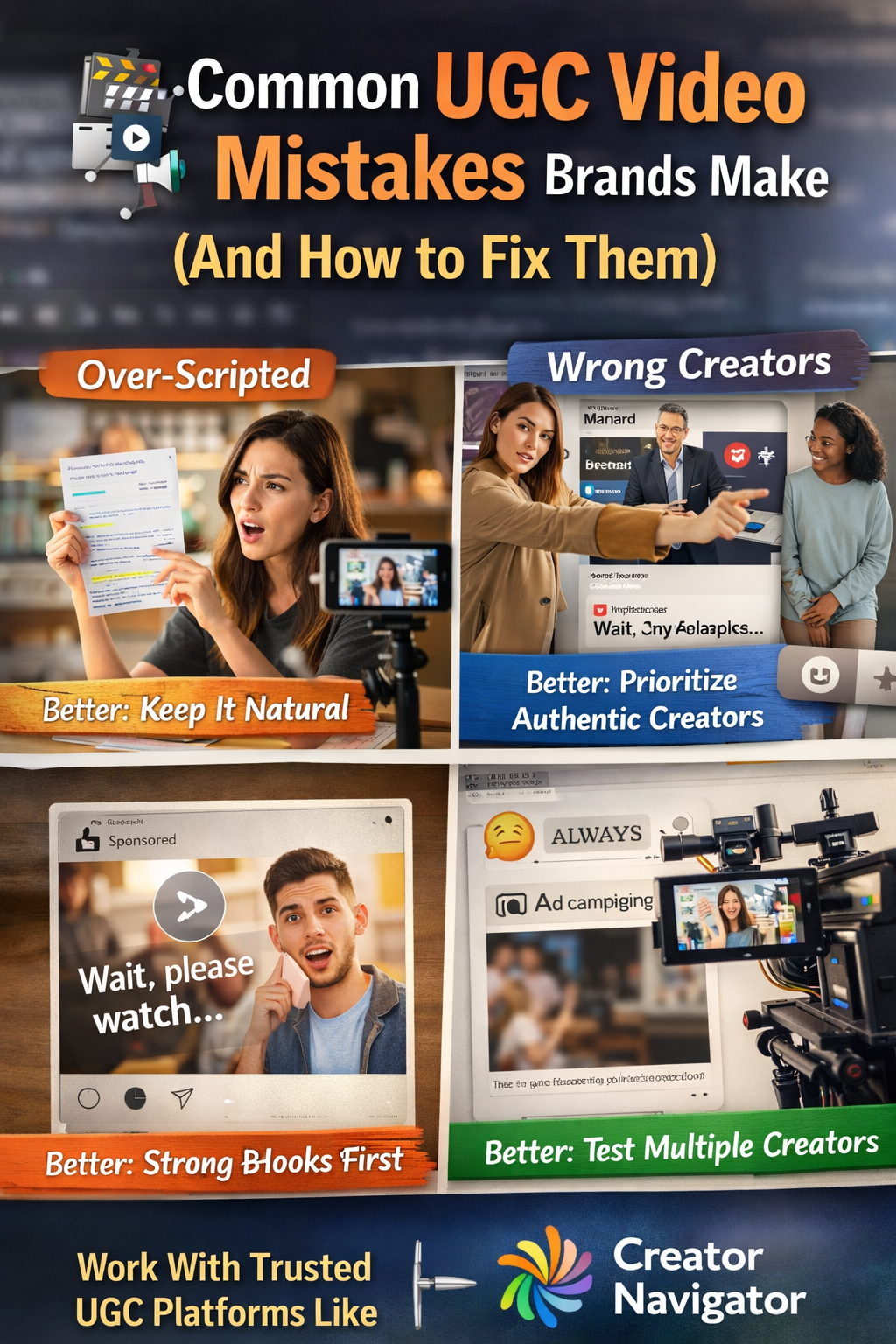
8. When Repetition Stops Working
Repetition only fails when:
- Creators feel forced or scripted
- Emotional authenticity is lost
- Videos are reused without variation
- Audience saturation is ignored
The solution isn’t “new ideas.”
It’s better execution.
Brands that monitor performance signals and refresh delivery—often with help from experienced UGC partners like Creator Navigator—avoid these pitfalls while continuing to scale.
9. Repetition Is Optimization, Not Laziness
There’s a difference between being repetitive and being strategic.
Repetition in UGC:
- Lowers creative risk
- Improves efficiency
- Maximizes proven insights
In performance marketing, consistency beats creativity when creativity lacks direction.
Conclusion: Consistency Beats Constant Creativity
In a noisy digital world, clarity and familiarity win.
Repeating the same UGC angle works because it:
- Builds trust
- Improves recall
- Strengthens algorithm learning
- Maximizes what already converts
The brands winning in 2025 aren’t endlessly brainstorming new ideas. They’re refining, repeating, and scaling what already works—intelligently.

Related Posts