
Introduction: The Failure Happens Earlier Than You Think
When content doesn’t perform, most people blame:
- Algorithms
- Timing
- Platform changes
- Low reach
But the real problem usually happens before the content is even published.
In 2025, brands and creators are producing more content than ever—yet most of it disappears without impact. Not because the content is bad, but because it was created without clarity, intent, or structure.
Content doesn’t fail on social media.
It fails at the planning stage.
1. Creating Content Without a Clear Purpose
One of the biggest mistakes in content creation is posting for the sake of posting.
Many brands ask:
- “What should we post today?”
Instead of: - “What should this content achieve?”
Every piece of content should have one primary goal:
- Educate
- Build trust
- Start a conversation
- Support a sale
- Strengthen positioning
When content lacks purpose, it feels empty—even if it looks good.
This is why brands that work with structured content systems, often alongside creator-led platforms like Creator Navigator, focus on intent first and execution second.
2. Confusing Consistency With Random Posting
Posting daily is not the same as being consistent.
True consistency means:
- Repeating core ideas
- Reinforcing brand beliefs
- Staying aligned with audience needs
Random posting creates noise, not trust.
When your audience can’t predict what you stand for, they don’t remember you. Content creation should feel like a conversation—not disconnected updates.
3. Not Knowing Who the Content Is For
Content fails quickly when it tries to speak to everyone.
Common signs:
- Generic messaging
- Safe opinions
- No emotional trigger
- No clear pain point
Effective content is specific. It speaks directly to:
- One audience
- One problem
- One mindset
This is why high-performing content strategies often involve creator–audience alignment, something many brands manage through curated creator ecosystems like Creator Navigator.
4. Focusing on Aesthetics Over Meaning
Visual quality matters—but meaning matters more.
Many brands invest heavily in:
- Design
- Editing
- Transitions
- Templates
But forget to ask:
- “Why should someone care?”
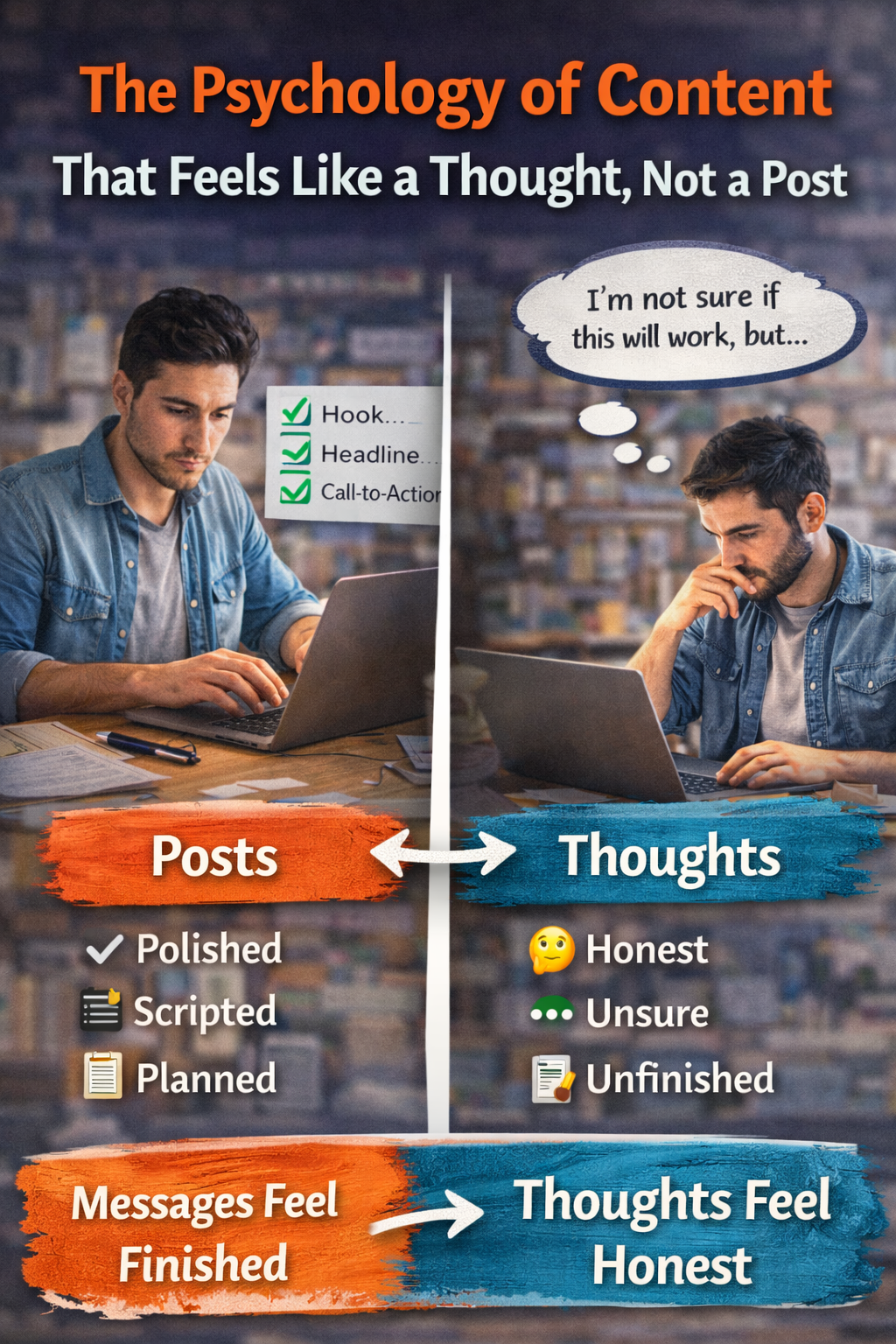
Content creation that looks good but says nothing doesn’t earn attention. In contrast, simple content with a strong message often outperforms polished but shallow posts.
5. Creating Content Without Emotional Relevance
People don’t share content because it’s informative.
They share it because it makes them feel understood.
Content fails when it:
- Doesn’t reflect real struggles
- Feels distant or corporate
- Avoids uncomfortable truths
Great content taps into:
- Frustration
- Curiosity
- Relief
- Validation
- Hope
This emotional layer is what turns content into connection—and connection into trust.
6. Treating Content as Output, Not Strategy
Many brands treat content like a checklist item:
- “Post done.”
- “Content scheduled.”
- “Next.”
But content is not output—it’s strategy in public.
Every piece of content shapes how people perceive:
- Your expertise
- Your values
- Your credibility
Brands that succeed treat content creation as long-term positioning, not short-term posting. This mindset is often reinforced through structured content frameworks supported by creator-focused platforms like Creator Navigator.
7. No System for Learning What Works
Content creation without feedback loops is guesswork.
If you’re not tracking:
- What people save
- What they comment on
- What they rewatch
- What they ignore
You’re repeating mistakes blindly.
High-performing content systems are built on iteration—not inspiration. The goal isn’t to be creative every day. The goal is to learn faster than competitors.
8. Chasing Virality Instead of Trust
Virality is unpredictable.
Trust is scalable.
Content created only to “go viral” often:
- Attracts the wrong audience
- Builds no brand memory
- Delivers no long-term value
Trust-building content may grow slower—but it compounds. It turns casual viewers into loyal followers and followers into customers.
This is why many brands now prioritize educational, relatable, and creator-led content over trend-chasing formats.
9. Why Content Needs Structure to Scale
Good content ideas are not enough.
To scale content creation, brands need:
- Clear content pillars
- Repeatable formats
- Defined tone and language
- Creator guidelines (not scripts)
Without structure, content remains inconsistent and fragile. With structure, creativity becomes sustainable.
This is where content systems—often supported by UGC and creator platforms like Creator Navigator—help brands maintain authenticity while scaling output.
Conclusion: Content Fails in Silence, Not in Public
When content fails, it rarely fails loudly.
It fails quietly:
- No engagement
- No conversation
- No memory
The solution isn’t posting more.
It’s thinking deeper before posting.
Content that succeeds is intentional, relatable, emotionally relevant, and strategically aligned. When brands treat content creation as a system—not a task—they stop guessing and start building real authority.

Related Posts