Introduction: When Growth Doesn’t Look Like Growth
Many brands panic when growth slows down.
Metrics flatten.
Graphs stop spiking.
Momentum feels lost.
But here’s a counter-intuitive truth:
👉 Sometimes growth feels slower because it’s becoming healthier.
In 2025, real growth doesn’t always look dramatic. It looks calm, steady, and often boring. And that’s exactly why it lasts.
1. Fast Growth Often Hides Structural Problems
Rapid growth feels exciting—but it often masks weak foundations.
When growth is too fast:
- Messaging hasn’t stabilized
- Trust hasn’t compounded
- Systems haven’t matured
- Audiences haven’t fully understood the brand
The result is growth that looks impressive but collapses easily.
Healthy growth, on the other hand, exposes problems early—and fixes them before scale.
2. Healthy Growth Prioritizes Understanding Over Reach
Unhealthy growth focuses on:
- More traffic
- More impressions
- More eyeballs
Healthy growth focuses on:
- Clear understanding
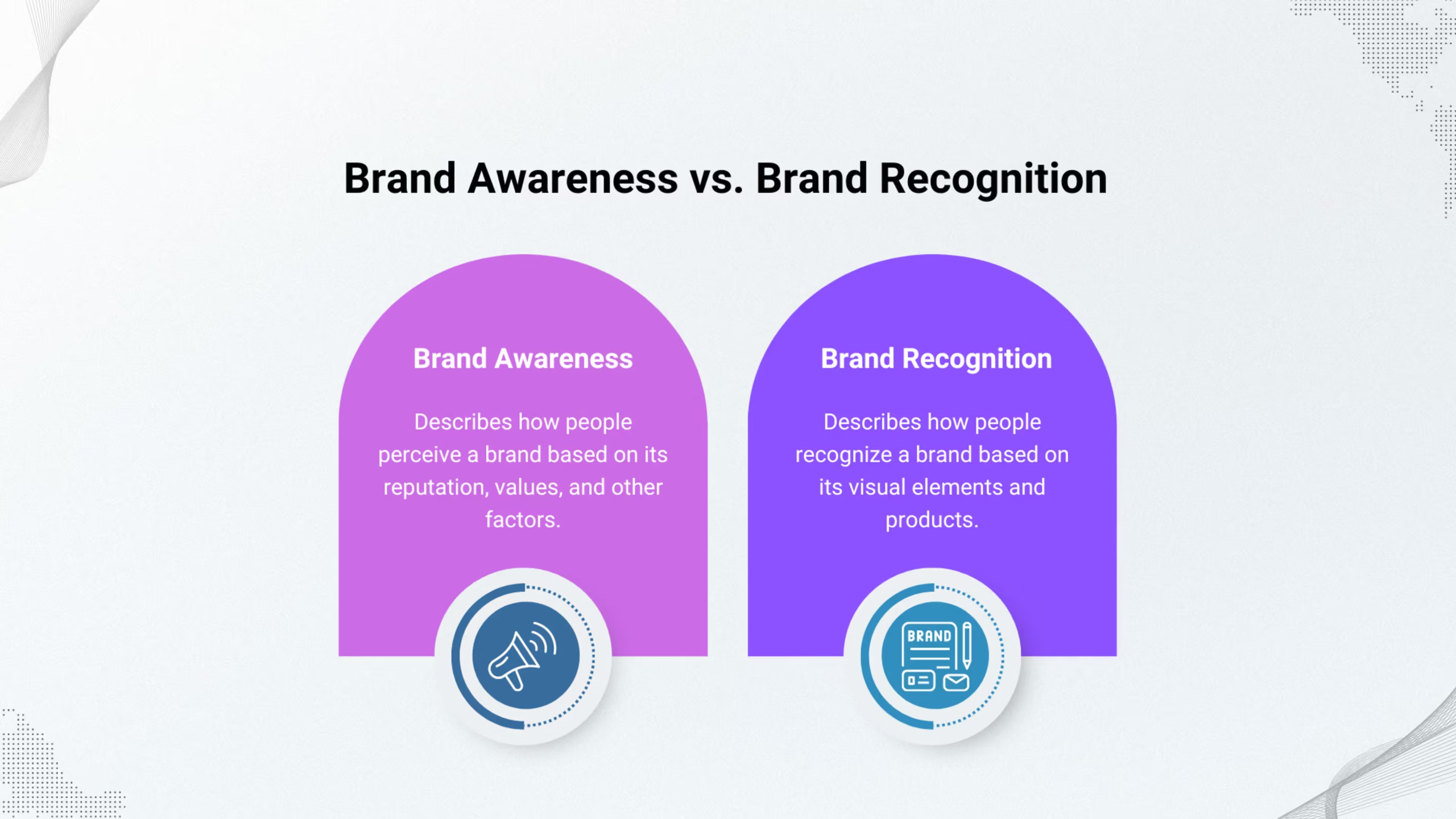
- Familiarity
- Recognition
- Recall
When people don’t need repeated explanations to understand what you do, growth becomes efficient—even if it appears slower at first.
This is why brands building creator-led trust systems, often through ecosystems like Creator Navigator, focus less on reach and more on resonance.
3. Growth Slows When Brands Stop Chasing Everyone
Early growth often comes from broad targeting.
But sustainable growth comes from narrow clarity.
Healthy brands:
- Choose a clear audience
- Commit to specific problems
- Repeat core ideas
- Stop diluting messaging
This narrowing feels like slowdown—but it actually increases conversion quality, retention, and long-term brand strength.
4. Familiarity Takes Time to Compound
People don’t trust brands instantly.
They need:
- Repeated exposure
- Consistent tone
- Familiar faces
- Predictable messaging
When growth shifts from discovery to familiarity, the pace feels slower—but the impact is deeper.
Familiar brands grow through memory, not momentum.
5. Healthy Growth Reduces Noise
Unhealthy growth is loud.
Healthy growth is quiet.
Loud growth:
- Chases trends
- Changes tone frequently
- Experiments without learning
Quiet growth:
- Repeats what works
- Learns deeply
- Builds consistency
This quiet phase is uncomfortable—but it’s where trust compounds.
6. Growth Feels Slow When Trust Replaces Urgency
Urgency accelerates action—but weakens belief.
Healthy growth reduces:
- Artificial scarcity
- Forced CTAs
- Pressure-based messaging
And replaces them with:
- Education
- Reassurance
- Emotional safety
This shift slows short-term spikes—but improves long-term decisions.
7. Strong Brands Feel Less Dependent on Campaigns
When growth is unhealthy, brands rely heavily on:
- Campaign launches
- Paid pushes
- External boosts
Healthy brands grow through:
- Ongoing content
- Consistent presence
- Creator storytelling
- Word-of-mouth
This transition feels like slowdown—but it’s actually independence forming.
Many brands accelerate this phase by using structured creator systems like Creator Navigator, ensuring growth continues even without constant campaigns.
8. Healthy Growth Is Measured Differently
Unhealthy growth celebrates:
- Spikes
- Virality
- Short-term metrics
Healthy growth watches:
- Returning users
- Faster decision-making
- Brand recall
- Organic mentions
These signals grow slowly—but they compound powerfully.
9. Why Brands Misinterpret Healthy Growth as Failure
Healthy growth doesn’t trigger adrenaline.
It doesn’t:
- Explode
- Shock
- Impress instantly
It:
- Stabilizes
- Strengthens
- Prepares the brand for scale
Brands often mistake this calm phase for stagnation—when it’s actually maturation.
Conclusion: Slow Growth Isn’t the Enemy—Fragile Growth Is
In 2025, growth that feels fast is often fragile.
Growth that feels slow is often strong.
Healthy growth:
- Builds belief
- Reduces resistance
- Compounds trust
- Prepares brands for longevity
The brands that last won’t be the ones that grew the fastest—but the ones that grew correctly.

Related Posts