
Introduction: Growth Is Rarely About Discovery
Most growth strategies focus on discovery:
- New audiences
- New channels
- New markets
But discovery alone doesn’t drive sustainable growth.
In reality, people choose brands they recognize, not brands they discover once.
That’s why familiarity—not reach—is one of the most underrated growth metrics in modern marketing.
1. The Brain Prefers the Familiar
Human brains are wired to avoid risk.
Familiar things feel:
- Safer
- Easier
- More trustworthy
Even when alternatives are objectively better, familiarity often wins.
This cognitive bias is why brands that “feel known” grow faster than brands that are simply “better.”
2. Familiarity Reduces Decision Friction
When people recognize a brand:
- They think less
- Hesitate less
- Research less
Familiarity shortens the decision cycle.
Growth accelerates not because people are convinced—but because choosing feels effortless.
3. Why Familiar Brands Convert Without Trying Harder
Familiarity creates emotional comfort.
When a brand feels familiar:
- Claims feel believable
- Messages feel less risky
- Pricing feels justified
This is why some brands convert better with fewer features, fewer offers, and less persuasion.
They don’t need to convince.
They’re already trusted.
4. Familiarity Is Built Through Repetition, Not Reach
Many brands mistake reach for growth.
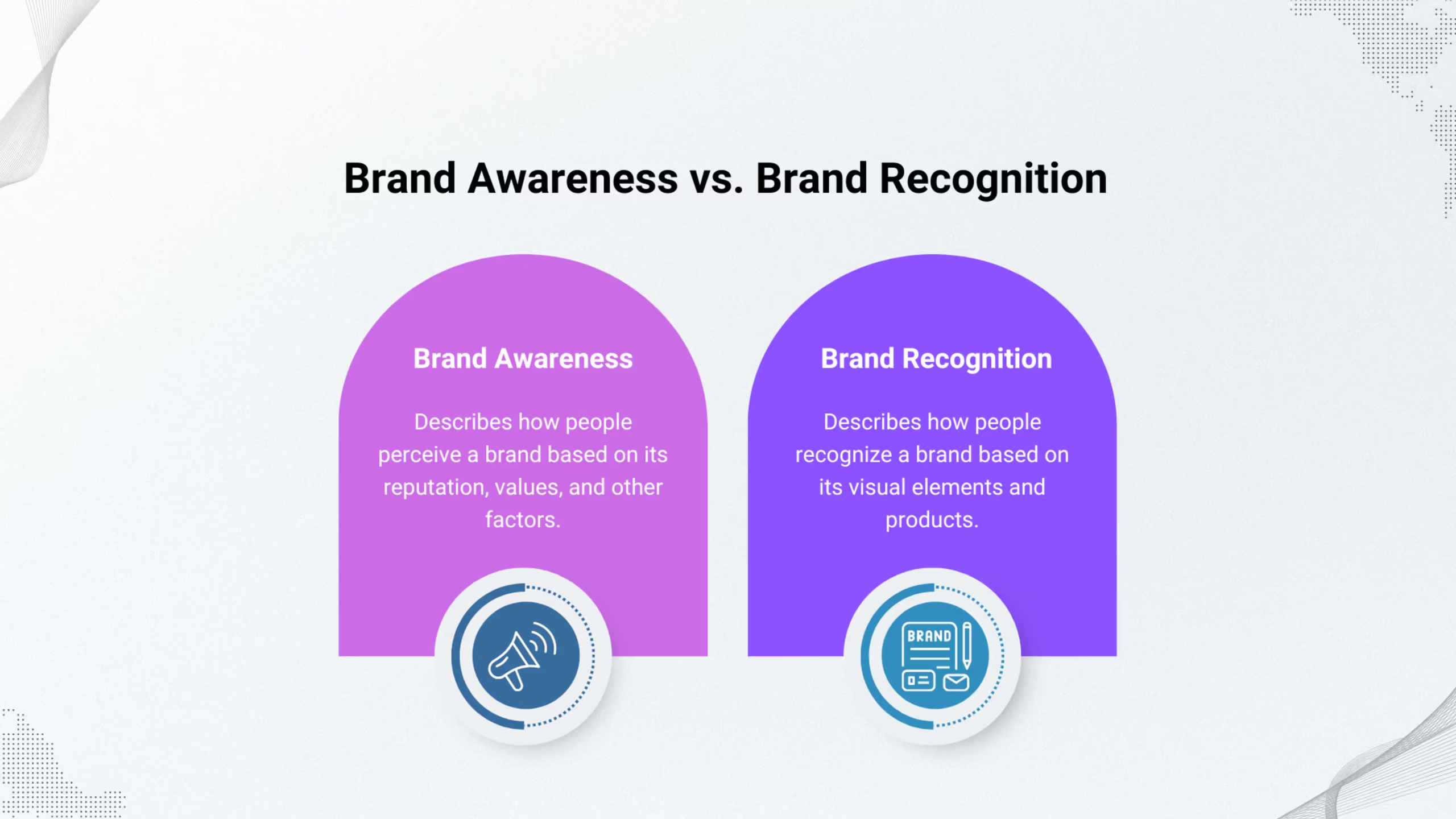
But reach without repetition builds awareness—not familiarity.
Familiarity comes from:
- Seeing the same message repeatedly
- Hearing the same voice
- Recognizing the same tone
- Seeing familiar faces
This is why creator-led storytelling and UGC—often managed through systems like Creator Navigator—play a powerful role in familiarity-driven growth.
5. Why Familiarity Outperforms Novelty Over Time
Novelty gets attention.
Familiarity builds preference.
Brands chasing constant novelty:
- Confuse audiences
- Reset trust repeatedly
- Lose recall
Brands that repeat themselves:
- Become recognizable
- Feel reliable
- Grow through memory
Growth compounds when people don’t have to re-learn who you are.
6. Familiarity Creates Brand Gravity
At a certain point, familiar brands attract:
- Repeat customers
- Organic referrals
- Lower acquisition costs
This is brand gravity—where growth becomes easier because people already trust the direction.
Marketing effort decreases, but results improve.
7. Why Familiarity Is Hard to Measure (But Powerful)
Familiarity doesn’t show up clearly in dashboards.
It shows up as:
- Faster decisions
- Lower resistance
- Organic mentions
- “I’ve seen this before” moments
Because it’s hard to quantify, many brands ignore it—despite its massive impact on growth.
8. Growth Accelerates When Brands Feel Predictable
Predictability doesn’t mean boring.
It means dependable.
Brands that feel predictable:
- Reduce anxiety
- Increase confidence
- Speed up choice
In uncertain markets, predictability becomes a competitive advantage.
9. Familiarity Is a Long-Term Growth Asset
Familiarity compounds quietly.
Every consistent interaction adds to:
- Brand memory
- Emotional safety
- Trust
Over time, this reduces the need for aggressive marketing. Growth becomes more organic, more efficient, and more resilient.
Conclusion: Growth Follows What Feels Known
People don’t choose brands because they’re new.
They choose brands because they feel known.
In 2025, growth marketing isn’t just about discovery or persuasion.
It’s about building familiarity at scale.
Because when a brand feels familiar, growth doesn’t need to be forced—it happens naturally.

Related Posts