Introduction: Why Some Content Feels Different
Some content doesn’t feel like it was “posted.”
It feels like it was thought out loud.
You scroll past hundreds of polished posts, but suddenly one line stops you:
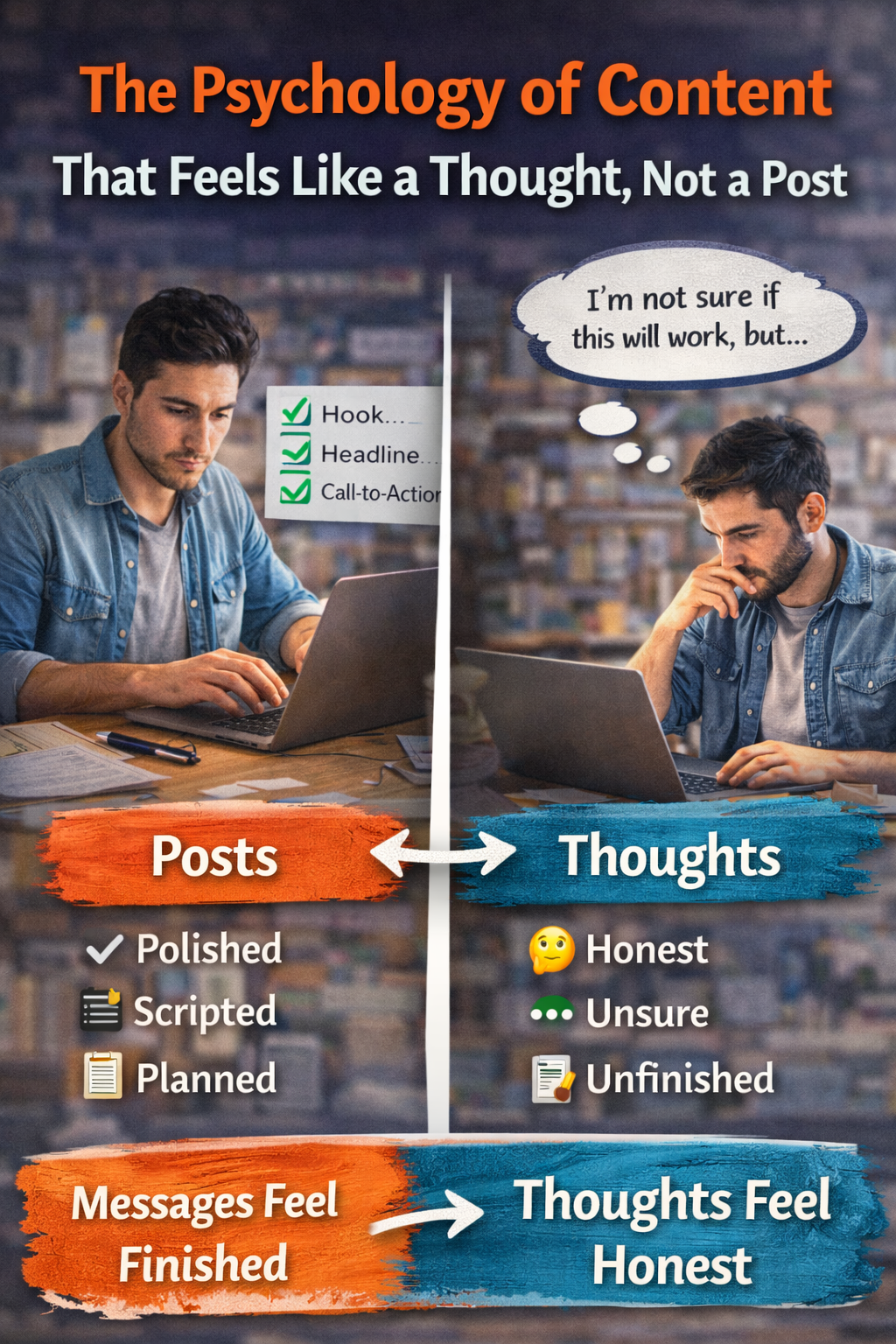
“I don’t know if this will work, but…”
There’s no hook formula.
No CTA.
No polish.
Yet it holds attention.
This is content that feels like a thought, not a post—and it works because of psychology, not tactics.
1. The Brain Trusts Thoughts More Than Statements
Statements feel finished.
Thoughts feel honest.
When content sounds like a conclusion, the brain evaluates it.
When it sounds like a thought, the brain joins it.
Thought-like content often includes:
- Pauses
- Uncertainty
- Reflection
- Incomplete ideas
This creates a subtle psychological invitation:
“Think with me.”
And people trust what they help think through.
2. Why Polished Content Triggers Defense
Highly structured posts feel intentional—and intention triggers skepticism.
The brain asks:
- Why are you telling me this?
- What do you want from me?
But thought-like content feels accidental.
Unplanned.
Human.
That removes resistance.
This is why many UGC and creator-led strategies—often supported by ecosystems like Creator Navigator—encourage creators to speak naturally instead of delivering scripted conclusions.
3. Thoughts Feel Private, Posts Feel Public
Posts feel like broadcasts.
Thoughts feel like whispers.
Thought-like content often uses:
- First-person language
- Inner dialogue
- Emotional honesty
- Small moments
This makes the viewer feel like they’re overhearing something personal—not being marketed to.
And privacy builds trust faster than performance.
4. Why Incomplete Content Holds Attention Longer
The human brain hates closure without participation.
Thought-like content often:
- Doesn’t resolve immediately
- Leaves emotional gaps
- Ends softly, not sharply
This creates cognitive engagement.
Instead of consuming passively, viewers mentally complete the idea—which deepens memory and connection.
5. The “Thinking Voice” Feels More Human Than the “Teaching Voice”
Teaching voices explain.
Thinking voices explore.
Audiences are tired of being taught.
They’re drawn to being understood.
Content that feels like a thought:
- Doesn’t preach
- Doesn’t convince
- Doesn’t assert superiority
It explores uncertainty—and uncertainty feels human.
6. Why Thought-Like Content Builds Trust Faster
Trust doesn’t come from authority alone.
It comes from vulnerability without performance.
When creators say:
- “I’m still figuring this out”
- “This didn’t work how I expected”
- “I’m not sure, but…”
It signals honesty.
This is why brands that leverage creator authenticity—often through curated networks like Creator Navigator—see stronger emotional engagement than brands relying solely on scripted messaging.
7. Algorithms Favor Thought-Like Engagement
Platforms track:
- Saves
- Replays
- Comments
- Watch time
Thought-like content triggers:
- Reflection
- Internal dialogue
- Rewatching
Not because it’s optimized—but because it feels real.
Conclusion: People Trust Thoughts More Than Messages
In a world full of content trying to say something, the content that thinks something stands out.
Thought-like content:
- Reduces resistance
- Builds intimacy
- Creates emotional memory
The future of content isn’t louder posts.
It’s quieter thoughts.

Related Posts